Computational pangenomics course, conference, and biohackathon in Memphis, TN, exploring the cutting edge of pangenomes, biology, methods, software, and artificial intelligence (AI).

Important Dates
-
Practical course/Conference/Biohackathon Registration Deadline: April 10, 2026
-
Selected participants will be notified by: April 17, 2026
-
Payment Deadline: April 30, 2026
-
Practical course / Workshop: May 11-12, 2026
-
Conference: May 13, 2026
-
Biohackathon: May 14-15, 2026
OPEN CALL FOR SPEAKERS
We invite experts and enthusiasts in pangenome research to present at the MemPanG26 conference on May 13, 2026. The submission deadline for talk proposals is April 15, 2026.
Focus Areas: The conference aims to delve into the multifaceted world of pangenome research and will cover a broad range of topics, including but not limited to, methods in pangenome research, genome assembly, data visualization, artificial intelligence (AI), and collaborative projects.
Diverse Perspectives: We are looking for speakers who can provide insights from different species contexts and who can discuss topics that lie at the intersection of pangenome methods and biology. We are particularly interested in hearing about your unique work and perspectives in pangenome research.
Duration: Invited talks are 15 minutes, followed by 5 minutes of discussion. Participant flash talks are 8 minutes, followed by 2 minutes for questions.
→ Conference pre-registration for speakers
We look forward to an engaging day of discussion!
MemPanG26 organizers
Sponsors
 |
|
|---|---|
|
As the Innovation Hub of the Delta, Epicenter exists to ensure that founders of innovative businesses have what they need to develop, launch and grow their ventures in the Greater Memphis region. |

MemPanG26 welcomes sponsorship from organizations that want to support open, collaborative pangenomics research and training.
If you are interested in sponsoring MemPanG26, please contact the organizers to discuss opportunities for the practical course, conference, and biohackathon.
Venue
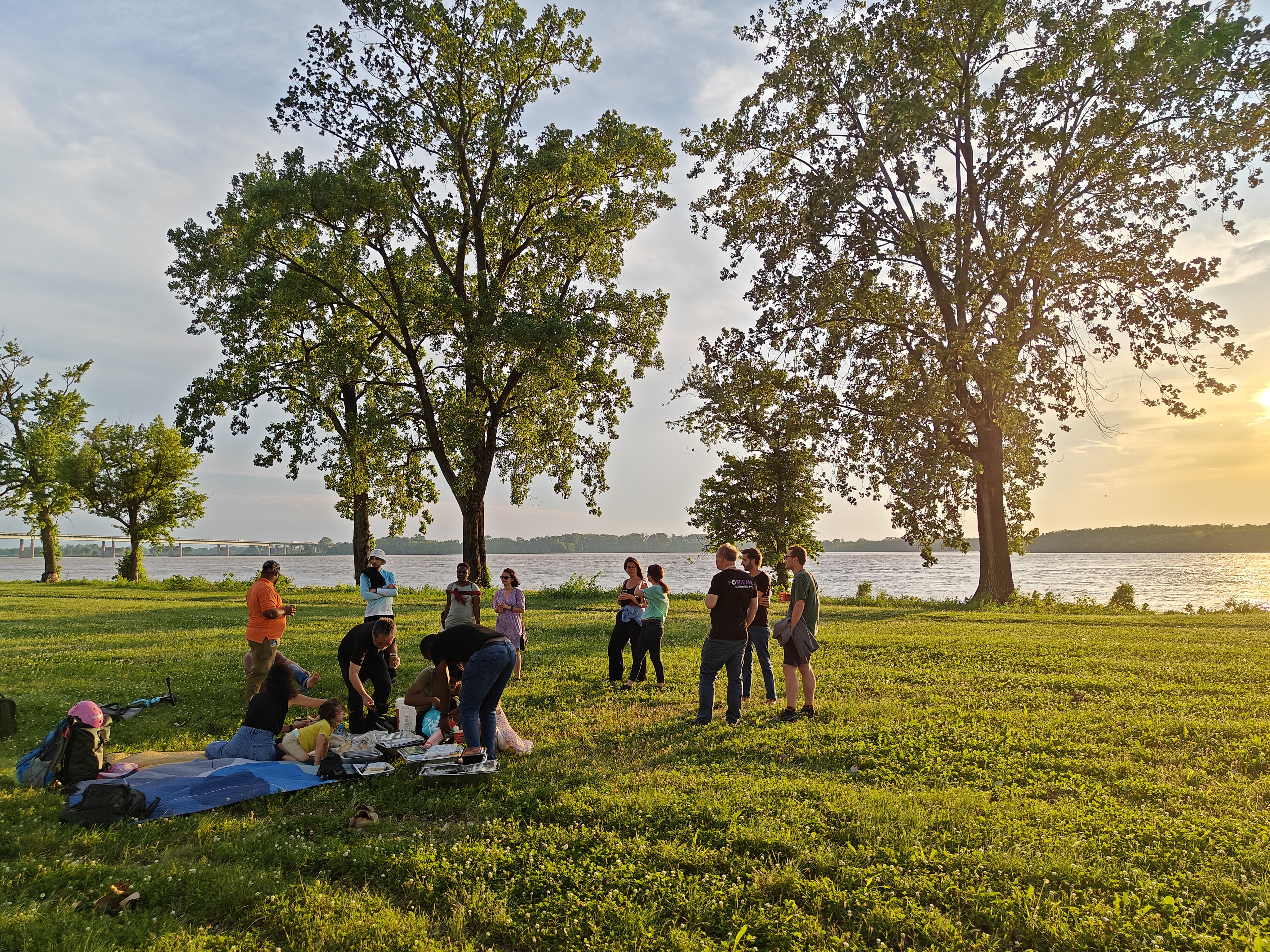
Hotels in Memphis
Transportation in Memphis
If you stay in Downtown, the Medical District, South City, or New Chicago, you can reach the event venue by getting on-demand, convenient, and affordable rides with Groove On-Demand.
About the practical course / workshop
Monday, May 11, 2026 - Tuesday, May 12, 2026
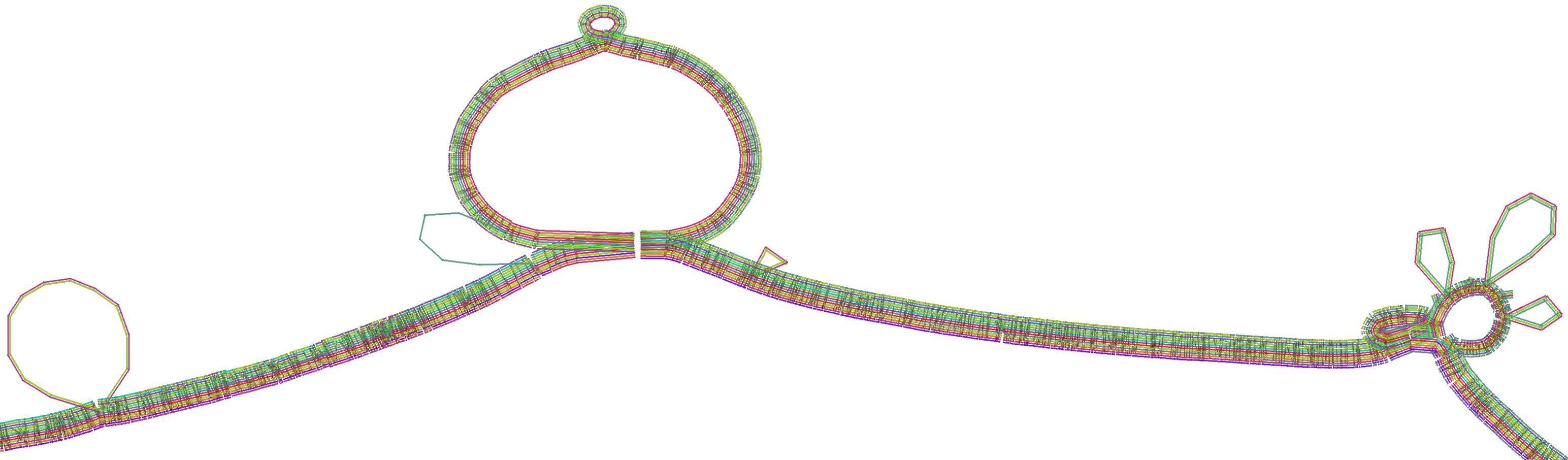
The use of a single reference genome in bioinformatics can lead to reference bias and miss important information about genome variability and relationships. New assembly methods have made it easier to generate high-quality complete genome assemblies, and using a pangenome graph that expresses many genomes and their mutual alignment can help address these issues.
This practical course / workshop will focus on building such graphs from whole genome assemblies and using them in various downstream applications in comparative genomics, evolution, variation analysis, sequence alignment, and phenotype association.
Participants will learn about pangenome concepts and gain practical experience building and analyzing pangenome graphs. They will apply these methods to complex research questions that require understanding the relationships between multiple genomes or accounting for variability when analyzing new genomes. By the end of the practical course / workshop, participants will have a strong understanding of pangenome methods based on whole genome assemblies.
About the conference (free attendance)
Wednesday, May 13, 2026
The in-person conference on the day after the practical course / workshop will bring together practical course / workshop participants and virtual and in-person speakers who are actively working on diverse aspects of pangenome research. Speakers will cover topics at the intersection of pangenome methods and biology, including a focus on basic methods, data structures, genome assembly, data visualization, and public collaborative pangenome projects.
We expect to draw speakers from a diverse set of species contexts.
Virtual and in-person attendance is free and open to the public. Link for attendance
About the biohackathon
People
Instructors
Erik Garrison - Associate Professor
 Genomicist with a quantitative social science background. I build methods that let us understand the precise relationships between thousands of genomes. In these, the genome is encoded in a graph that may represent a population sample of individuals from the same species, a metagenome, the diploid genome of a single individual, or any other useful collection of sequences.

Andrea Guarracino - Assistant Professor
 Computer scientist who applies pangenomics to the study of genome variation and disease.


+
+
+
Franco Marsico - Postdoctoral Fellow
 Biologist focused on population genetics. Developing statistical methods for kinship inference and population structure.
Helpers
Farnaz Salehi
Shuo Cao
Ernestine Amos-Abanyie
Fred Muriithi
Enza Colonna
Organizers
Andrea Guarracino, Translational Genomics Research Institute, Phoenix, AZ, US
Erik Garrison, Department of Genetics, Genomics and Informatics, UTHSC, Memphis, TN, US
Flavia Villani, Translational Genomics Research Institute, Phoenix, AZ, US
Pjotr Prins, Department of Genetics, Genomics and Informatics, UTHSC, Memphis, TN, US
Enza Colonna, Department of Genetics, Genomics and Informatics, UTHSC, Memphis, TN, US
Tamara Brock, Department of Genetics, Genomics and Informatics, UTHSC, Memphis, TN, US

Program
Practical course / Workshop Monday-Tuesday, May 11-12, 2026
| Day | Time | Instructor(s) | Topic |
|---|---|---|---|
Monday, May 11, 2026 |
09:30-10:00 |
Erik Garrison |
Presentation: Introduction to pangenomics, pangenomes and pangenome graph representations |
10:00-10:45 |
Everyone |
Practical: Build your first pangenome graphs |
|
10:45-11:00 |
Everyone |
Coffee break |
|
11:00-12:30 |
Everyone |
Practical: Pangenome graph building with PGGB |
|
12:30-14:00 |
Everyone |
Lunch (provided) |
|
14:00-14:15 |
Andrea Guarracino |
Presentation: Understanding and manipulating pangenomes |
|
14:15-15:45 |
Everyone |
Practical: ODGI toolkit commands |
|
15:45-16:00 |
Everyone |
Coffee break |
|
16:00-17:00 |
Everyone |
Practical: Sequence partitioning |
|
17:00-17:05 |
Everyone |
Q&A, Day 1 Survey |
| Day | Time | Instructor(s) | Topic |
|---|---|---|---|
Tuesday, May 12, 2026 |
09:30-10:15 |
Andrea Guarracino / Hasitha Kaushan |
Presentation: Implicit pangenomics / Pangenome alignment compression |
10:15-10:45 |
Everyone |
Practical: Implicit pangenome graphs |
|
10:45-11:00 |
Everyone |
Coffee break |
|
11:00-12:30 |
Everyone |
Practical: Implicit pangenome graphs |
|
12:30-14:00 |
Everyone |
Lunch (provided) |
|
14:00-15:15 |
Everyone |
Practical: Pangenome alignment compression |
|
15:15-15:45 |
Franco Marsico |
Presentation: Local ancestry inference from pangenomes |
|
15:45-16:00 |
Everyone |
Coffee break |
|
16:00-17:00 |
Everyone |
Practical: Local ancestry inference |
|
17:00-17:05 |
Everyone |
Q&A, Day 2 Survey |
|
17:05-17:15 |
TBD |
Closure |
Conference Wednesday, May 13, 2026
Invited talks are 15 minutes followed by 5 minutes of discussion. Flash talks from course participants are 10 minutes.
Chairpersons: Rob Williams, Enza Colonna
Virtual attendance: Join the conference on Zoom
| Session | Time | Title | Presenter | Affiliation |
|---|---|---|---|---|
Registration |
09:00 - 09:30 |
Registration and coffee |
* |
* |
Opening |
09:30 - 09:40 |
Epicenter |
||
Opening |
09:40 - 09:55 |
Introductory remarks |
Rob Williams |
Department of Genetics, Genomics and Informatics, UTHSC |
Full talk |
10:00 - 10:20 |
Ultima Genomics - Redefining High-Throughput Sequencing |
Drew Greer |
Ultima Genomics |
Full talk |
10:20 - 10:40 |
Towards interactive pan-genome browsing in JBrowse 2 |
Diesh |
University of California, Berkeley |
Full talk |
10:40 - 11:00 |
Developing a graphical pangenomic pipeline for detecting polymorphic mobile genetic elements |
Olivier Levine |
University of Georgia |
Break |
11:00 - 11:20 |
Coffee break |
* |
* |
Full talk |
11:20 - 11:40 |
GWAS Follow-up of Complex Polymorphic Loci with Pangenome Visualization |
Scott Mastromatteo |
The Hospital for Sick Children |
Flash talk |
11:40 - 11:50 |
To be defined |
Kritika Chopra |
|
Flash talk |
12:00 - 12:10 |
A fast, lossless pangenome-aware read mapper |
Harieasswar Lakshmidevi |
Department of Genetics, Genomics and Informatics, UTHSC |
Flash talk |
12:10 - 12:20 |
Plant immune system diversity with short reads - a la pangenome graph |
Andrea Guarracino |
TGen |
Flash talk |
12:20 - 12:30 |
Genome Graph Approaches for Tandem Repeat Haplotype Inference and Methylation Analysis |
Luis Fernandez Luna |
McGill University |
Break |
12:30 - 14:00 |
Lunch (provided) |
* |
* |
Flash talk |
14:00 - 14:10 |
Adapting PGGB to Recapture the Toxoplasma gondii mitochondrial DNA structure |
Rafeed Rahman Turjya |
University of Georgia |
Flash talk |
14:10 - 14:20 |
Using pangenomes to understand genomic variation in complex genomic regions |
Laura Pignata |
Department of Genetics, Genomics and Informatics, UTHSC |
Flash talk |
14:20 - 14:30 |
Pangenome-Wide Association Study (in mice) |
Gautam Shirsekar |
University of Tennessee |
Full talk |
14:30 - 14:50 |
Future directions in pangenomics |
Erik Garrison |
Department of Genetics, Genomics and Informatics, UTHSC |
Closing |
14:50 - 15:00 |
Closing remarks |
Organizers |
Biohackathon Thursday-Friday, May 14-15, 2026
| Day | Time | Topic |
|---|---|---|
Thursday, May 14, 2026 |
09:30-10:30 |
Kickoff - Project pitches |
10:30-12:00 |
Hacking |
|
12:30-14:00 |
Lunch |
|
14:00-15:30 |
Hacking |
|
15:30-16:00 |
Coffee break |
|
16:00-17:00 |
Hacking - Projects update |
| Day | Time | Topic |
|---|---|---|
Friday, May 15, 2026 |
09:30-10:30 |
Hacking |
10:30-11:00 |
Coffee break |
|
11:00-12:30 |
Hacking |
|
12:30-14:00 |
Lunch |
|
14:00-15:30 |
Hacking |
|
15:30-16:00 |
Coffee break |
|
16:00-17:00 |
Projects Presentation - Conclusions |
Registration and Practical Information
→ Registration for event attendees
Registration includes access to: all lectures and practical sessions, all course materials.
Cost
The cost includes all expenses associated with the event, with lunches, coffee, and snacks. In certain circumstances, we can waive the fees.
Academic - $250, with financial support if needed
Industry - $500
Selection criteria
This practical course / workshop is intended for biologists and bioinformaticians interested in studying organisms with high genetic diversity or without a reference genome, as well as those involved in comparative genomics and the assembly of pangenomes for any species.
Selection of participants will be based on:
-
good knowledge of Linux operating system and basic shell commands. This will be a mandatory prerequisite.
-
familiarity with genomics data formats (e.g., FASTA, VCF, BED, …) is a plus.
-
impact of the practical course / workshop for the participant and their research group.
-
stage of the research project: priority will be given to participants with data already available and ready to be analyzed (participants data will not be analyzed during the practical course / workshop).
Fulfillment of these conditions by participants will be assessed through the registration form.